
Can printed board assembly be used
Conventional printed circuit boards (PCB) use multiple metallization layers to route metal tracks that interconnect surface mount devices (SMDs). They are rigid and have well-established manufacturing methods. However, they are also limited in their complexity. Stretchable electronics, on the other hand, are in-development design class that can be mechanically flexed in various directions and still function properly1.
To create stretchable circuits, scientists have been working to combine the attributes of rigid printed board assembly with the flexibility of a flex circuit1. The goal is to make electrical connections that can flex while maintaining the integrity of the assembly. There are a variety of potential or in-progress applications that would benefit from a flexible circuit, including folding cell phones, electrical connections for wearable and mobile electronics, or replacements for wire harnesses in vehicles, spacecraft, or satellites2.
The key to the success of flexible electronics is using materials that can handle a lot of strain without sacrificing functionality. Researchers have been exploring a wide range of options, from hybrid rigid-flex designs that incorporate interconnect copper on the flex substrate between rigid PCB elements to full flexible PCBs with entire systems soldered onto the flex substrate3.
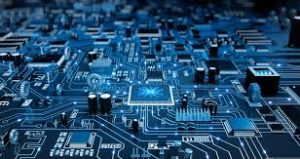
Can printed board assembly be used in stretchable electronics?
These new types of devices are incredibly complex to build, as they require a delicate balance between the rigidity of the rigid PCB and the flexibility of the flex circuit. To do this, they have used a special material known as eutectic gallium-indium (eGaIn). The liquid eGaIn can be transferred from rigid carrier substrates to a softer insulator substrate. It can then be etched to form the copper traces needed for the circuit.
Once the traces are in place, the assemblers can apply solder paste to the corresponding areas on the flex substrate. The eGaIn can then bond with the surface of the flex circuit, forming a durable and strong connection. Once the soldering is complete, the assemblers can add surface mount components. This step can be done manually or with a pick-and-place machine, which uses mechanical or vacuum-based movements to place the component where it needs to be in the finished PCB. These machines can improve throughput while reducing human error and increasing accuracy.
During this stage, the assemblers can also apply a clear polyimide layer to protect the flex circuit and increase its lifespan. Lastly, the assembly can undergo inspections, such as automated optical inspection and X-ray imaging. This can help ensure the final assembly will work as expected and detect any errors or anomalies that may occur during the process.
While many technologies have been developed to create stretchable PCBs, few of them are currently ready for mass production. A lack of reliable manufacturing methods, as well as the specialized materials required to build these devices, is hindering this research. However, the research is encouraging. As the technology continues to evolve, it may become possible to use it for a wider range of industrial applications.