
Printed Flex pcb board Services
The flexibility and lightweight nature of flex circuits have allowed them to be used in many areas of manufacturing. They are widely used in automotive, lighting, and electronic consumer products, among other industries. In fact, flex PCBs are now replacing traditional ribbon connectors and wiring harnesses as they enable smaller, more compact designs. They also provide a greater level of design freedom, which helps manufacturers reduce the time and costs associated with assembling complex products.
To ensure a high-quality product, there are certain factors that should be taken into consideration when designing a flex pcb board. One of the most important considerations is determining the correct bending radius. In addition, the thickness of the copper traces should be carefully planned to prevent I-beaming and cracking in the trace copper during flexing. Conductors should also be routed perpendicular to the overall bending region to eliminate stress points that cause damage.
Another factor that needs to be considered is the adhesive type and strength. Different types of adhesives are available for use with flex circuits, including acrylic, epoxy, and pressure-sensitive adhesives. The adhesive used on a flex circuit board can make the difference between a successful and unsuccessful final product.
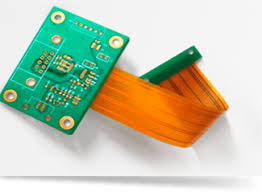
An Overview of Printed Flex pcb board Services
The metallization process is also an essential component of a flex PCB. It determines the conductivity of a circuit board and its resistance to corrosion. The metallization process also determines whether the circuit boards will be compatible with soldering materials. For this reason, it is critical to choose a turnkey PCB manufacturer that offers flexible PCBs with a wide range of metallization options.
In terms of assembly, a flex PCB can be made using either through-hole or surface mount technology (SMT). SMT is a highly automated method that is ideal for low-volume production. Through hole assembly is a more manual technique that involves inserting wire leads into holes in the bare circuit board and soldering them.
It is important to choose a reputable turnkey PCB manufacturer that offers flexible and rigid-flex PCBs. This way, you can be confident that your order will be processed on time and correctly. It is also helpful to choose a company that has a streamlined production workflow and quality control processes. This will ensure that your flex PCB meets all of your requirements.
A good flex PCB should be free of defects and have high reliability. To achieve this, the board must be inspected for all relevant features, such as the size, thickness, and solderability of the conductors. It should also be tested for mechanical properties such as flexing and thermal shock. Testing can help to identify any defects that may have occurred during the fabrication or assembly process and ensure that your flex PCB is ready for use in your end-product. Finally, a flex PCB should be able to withstand environmental conditions such as humidity, temperature extremes, and UV exposure. The test results should be documented and analyzed to ensure that the flex PCB is in working condition.